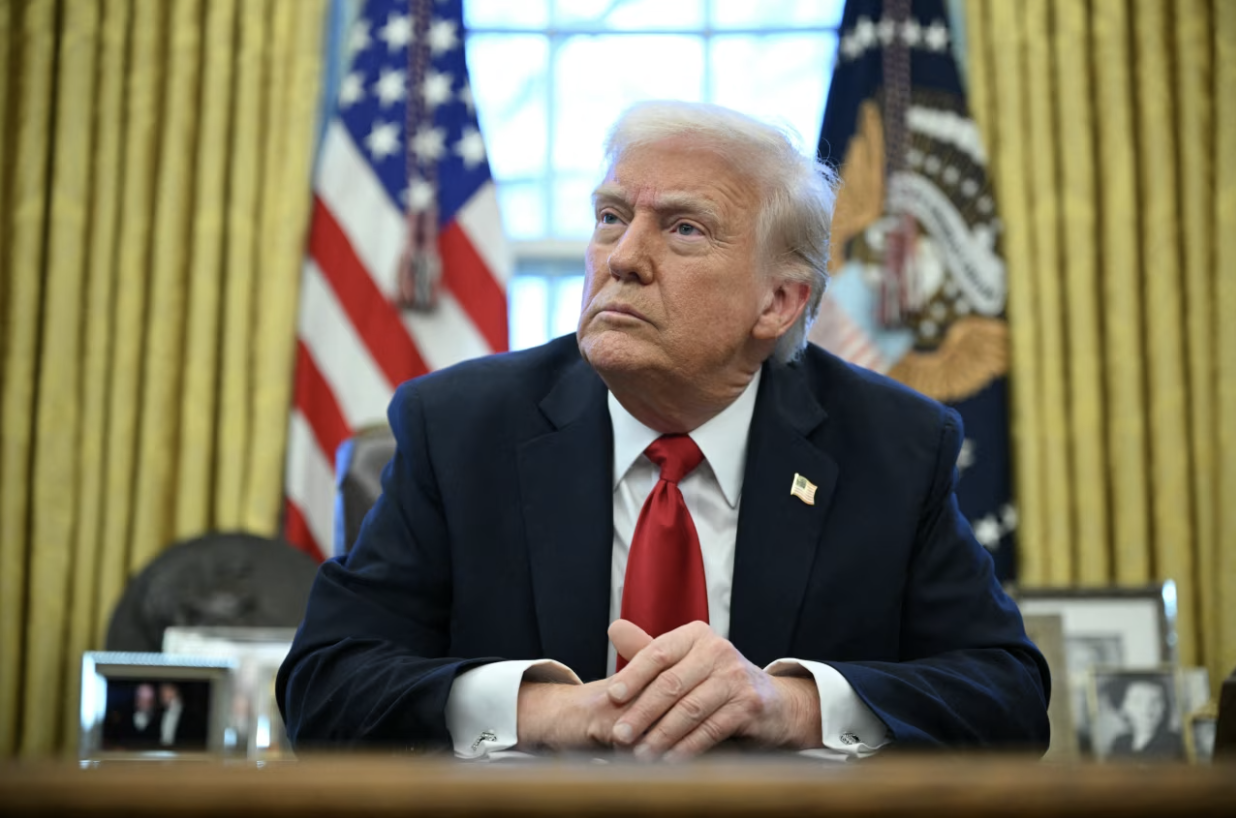
In remarks at the White House last month, President Obama claimed that if Republicans "had some better ideas" on health care, he was "happy to hear them. But I haven't heard any so far."
The Democratic National Committee expanded the president's charge, claiming in a press release last week that "the GOP is simply out of ideas" on health care. Liberal opinion writers are now echoing Mr. Obama. The Washington Post's Ezra Klein writes that "Republicans have no idea what is it is they'll do" to replace the Affordable Care Act. The New York Times's Paul Krugman chimes in that the GOP goal is to "deny essential health care and financial security to millions of their fellow Americans."
Mr. Obama and his hallelujah chorus are wrong. Republicans have plenty of sensible ideas to make health coverage more accessible and more affordable.
Many congressional Republicans, such as Oklahoma's Sen. Tom Coburn and Wyoming's Sen. Mike Enzi, have long advocated making health insurance completely portable so workers can take their plans with them from job to job. This means giving individuals who buy coverage for themselves a tax advantage similar to the one that employers enjoy when they cover employees. That change also could make coverage more affordable for the self-employed and even universal for all workers.
In the House, Republicans such as Texas Rep. Sam Johnson and Louisiana's Charles Boustany (a cardiovascular surgeon), want to allow smaller companies to pool their risk to get the same discounts from insurance carriers that bigger companies do. Others, including Rep. Marsha Blackburn of Tennessee and Wisconsin Rep. Paul Ryan, want to spark increased competition by allowing health-insurance policies to be sold across state lines, as are auto insurance policies.
ObamaCare reduced the amount families can save tax free for medical expenses; the House Republican Study Committee wants to raise the amount. Paired with health-savings accounts, this can put quality health care within the reach of many more families.
Defensive medicine—the use of unnecessary tests and procedures to ward off malpractice suits—cost Medicare and Medicaid an estimated $55.6 billion in 2008, according to a 2010 study in Health Affairs. Thus Texas Rep. Lamar Smith has championed medical liability reform at the federal level to rein in junk lawsuits, despite qualms that the issue should be left to the states.
Texas Reps. Mike Burgess (who practiced obstetrics and gynecology) and Joe Barton have introduced bills to establish transparency in pricing and medical outcomes so patients can compare the costs for procedures at area hospitals and their relative success in performing them. Louisiana Rep. Bill Cassidy, also a physician, has introduced a bill that would allow Medicaid patients to convert the value of their government benefit to pay for private coverage.
Republicans have put these and other ideas into comprehensive reform packages. Georgia Rep. Tom Price, an orthopedic surgeon, has introduced a comprehensive alternative to ObamaCare that includes many of the GOP's reforms. Tennessee's Phil Roe, a retired OB/GYN, will introduce a new ObamaCare replacement package next month when Congress returns. Mr. Enzi first introduced a comprehensive bill including GOP reform proposals in 2007 and has updated it regularly.
The president and his liberal posse have a fundamental, philosophical objection to conservative ideas on health care. They oppose reforms that put the patient in charge rather than government, that rely on competition rather than regulation, and that strengthen market forces rather than weaken them.
Senate Majority Leader Harry Reid recently called ObamaCare "a step in the right direction," but noted that his goal is "absolutely" a single-payer system in which government delivers all health care. When he was running for president in 2008, Mr. Obama admitted he "would probably go ahead with a single-payer system" if he was "designing a system from scratch." It's no surprise that he professes not to have heard any good ideas from Republicans.
In the past, with a few exceptions, Republicans talked too infrequently and with insufficient passion about health-care reform, leaving the field to the Democrats. There's a different political reality today.
Many Americans ache for an alternative to ObamaCare (54% disapprove of the law, according to the July 22 CBS News poll). To dismantle this monstrosity, however, Republicans must make their alternatives widely known.
As Wyoming's Sen. John Barrasso, one of the GOP's leading health-care reformers and an orthopedic surgeon, puts it: "Republicans have ideas that actually deliver what Americans want—lower costs and greater access. Our ideas will win because they will improve health care in our country."
A version of this article appeared August 22, 2013, in the U.S. edition of The Wall Street Journal, with the headline: Republicans Do Have Ideas for Health Care and online at WSJ.com.