President Barack Obama's speech last week at New York Cooper's Union showcased two unattractive verbal leitmotifs. The first was the president's reliance on straw-man arguments. America, he said, need not "choose between two extremes . . . markets that are unfettered by even modest protections against crisis, or markets that are stymied by onerous rules."
Mr. Obama was right in calling this "a false choice." Who is suggesting that Wall Street should not be regulated?
The other, more troubling rhetorical device was Mr. Obama's labeling his opponents as "special interests," and demanding that they stop disagreeing with him and get on board his legislative express. Speaking to bank executives, he decried the "furious effort of industry lobbyists to shape" financial regulation legislation—a barb aimed at the investment bankers in the audience who have hired lobbyists. The president urged "the titans of industry" to whom he was speaking "to join us, instead of fighting us."
While criticizing political opponents is standard operating White House procedure, the practice of summoning critics to bully them in public is unpresidential and worrisome.
Before his health-care bill passed, Mr. Obama sent a tough letter to health-insurance CEOs and then castigated them 22 times in a follow-up prime-time televised speech. This is behavior worthy of a Third World dictator—not the head of a vibrant democracy.
Mr. Obama has also excoriated drug and health-insurance companies, while remaining content to have them spend tens of millions of dollars on ads supporting his health-care bill. This smacked of Chicago-style shake-down politics.
Too often, Mr. Obama disparages those who disagree with him as having venal, illegitimate motivations. In his Cooper Union speech he berated the "battalions of financial industry lobbyists" for their "misleading arguments and attacks." He blamed their "withering forces" for buckling "a bipartisan process" that had "produced . . . a common-sense, reasonable, non-ideological approach."
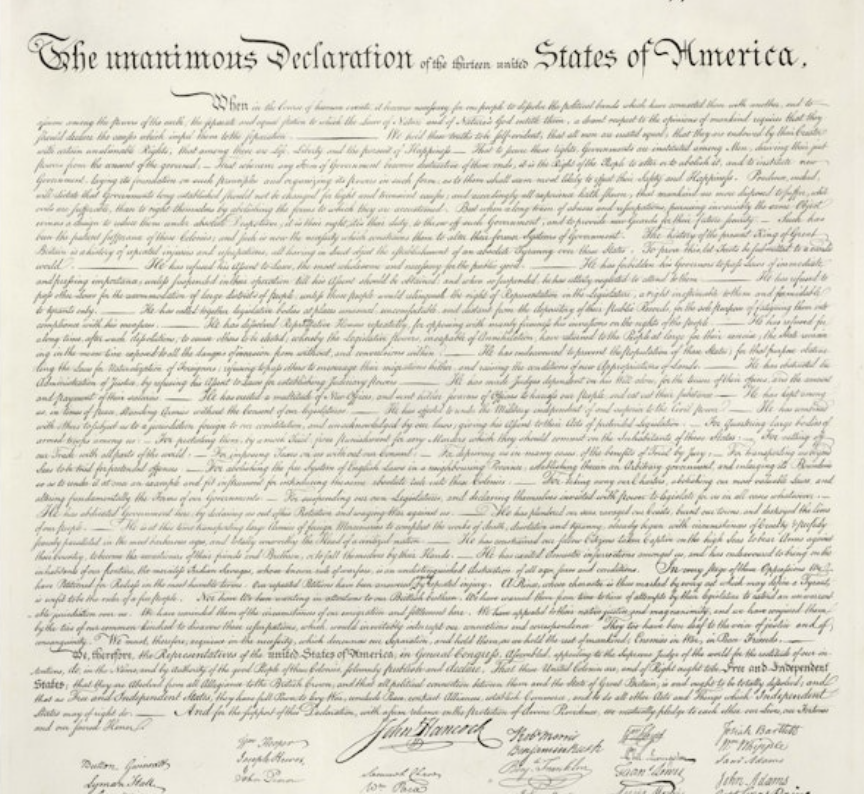
Maybe the renowned lecturer of constitutional law at the University of Chicago should reacquaint himself with Federalist No. 10. James Madison, a father of the Constitution, suggested that there are "two methods of curing the mischiefs of faction."
One was to destroy "the liberty which is essential to its existence"—something that is anathema to our democratic system. The other was to give "to every citizen the same opinions, the same passions, and the same interests," which is impossible.
"The latent causes of faction are thus sown in the nature of man," Madison wrote. Recognizing this led the Founders to create a system in which competition between interests restrains government, cools passions, and forces political compromise. This has kept our politics floating around the center.
Mr. Obama's attacks on his critics are not only unbecoming; they undermine a political process that would otherwise trend toward occasional bipartisan compromise. They are also hypocritical. Mr. Obama said in New York last week that "a lack of consumer protections and . . . accountability" created the credit crisis. As a senator in 2005, he joined Sen. Chris Dodd (D., Conn.) to threaten to filibuster a GOP effort to rein in Fannie Mae and Freddie Mac when it was still possible to diminish the role those companies would play in the financial crisis. He later voted for the Fannie and Freddie reforms after the two went belly up in 2008.
But it is the president's intimidation that is most troubling. Mr. Obama has the disturbing tendency to question the motives of those who disagree with him, often making them the objects of ad hominem attacks. His motives, on the other hand, are pure.
Mr. Obama often makes it seem illegitimate to challenge his views, and he isn't content to argue issues on the merits. Instead, he wants to make opponents into pariahs. And it's not just business executives who are on the receiving end. We've also seen this pattern with the administration's attacks on the tea party movement and those who attended town-hall meetings last summer on health care.
This is a bad habit—and a dangerous one. The presidency is a very powerful office, and presidents need to be careful not to use it to silence dissenting voices.
Mr. Obama will learn these efforts don't work. In a big, free nation like ours, people want to debate the issues. They don't take kindly to arrogant leaders who believe it is their right to silence the opposition—by either driving them out of the legislative process or pushing them out of the public debate with fiery rhetoric. Through the anonymity of a ballot box and beyond the power of presidential intimidation, voters can express their discontent and they will.
This article originally appeared on WSJ.com on Wednesday, April 28, 2010.