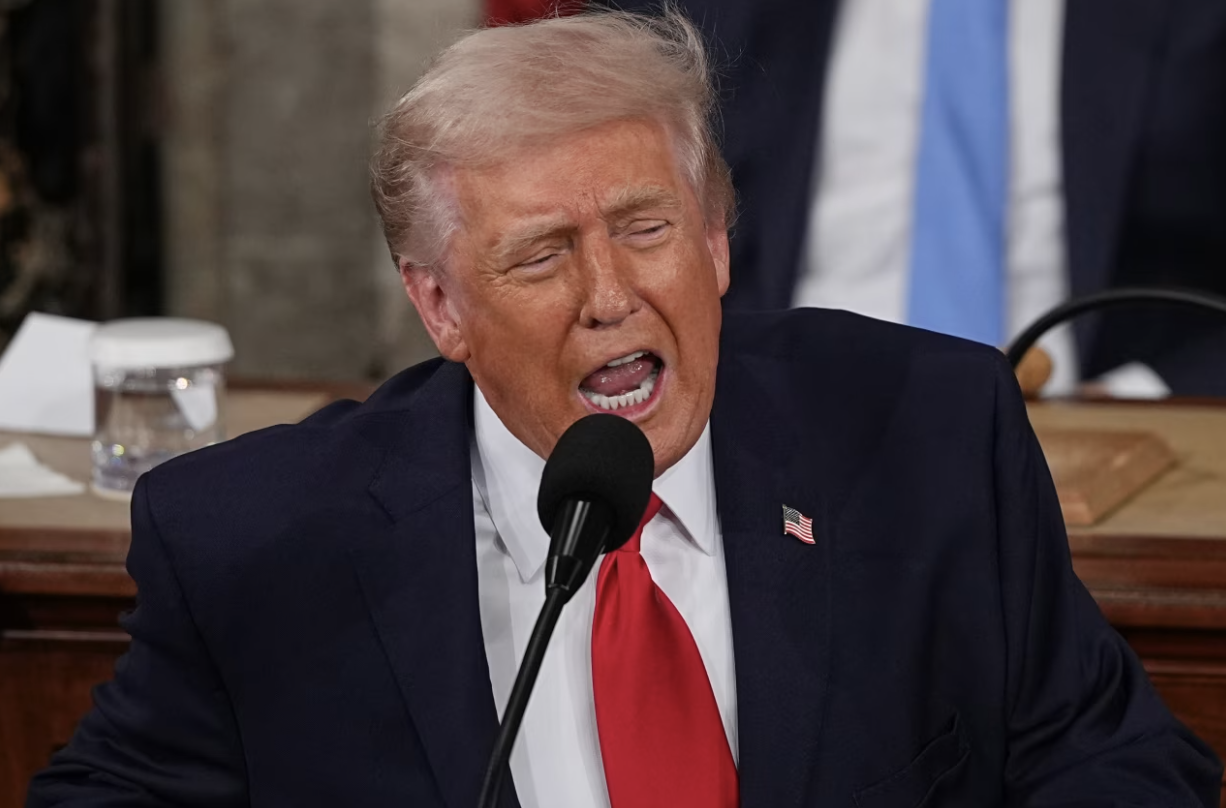
At the March 10 Republican debate in Miami, Donald Trump said “I think that whoever gets the most delegates should win”—meaning that if no candidate holds a majority at the GOP’s Cleveland convention, the nomination should go to whoever has a plurality.
A majority, The Donald said, is an “artificial number that was set by somebody.” But decrying the use of what he called a “very random number” is not just whining; it is a demand for radical change.
How radical? The rule that the Republican nominee must win a majority of the national convention has been in force for 160 years, since the party’s first convention in 1856 selected John C. Fremont as its standard-bearer. Five Republicans who went on to become president trailed in the convention when voting began.
In 1860, New York Sen. William H. Seward topped the first ballot with 173½ votes, 60 short of a majority. Abraham Lincoln was behind with 102. His managers feverishly worked the convention’s anti-Seward majority and, probably with the help of promises of patronage, Lincoln closed the gap on the second ballot and won on the third. Angry, a quarter of the delegates stayed with Seward and the convention ended in a split. Still, Lincoln prevailed and became the nation’s savior.
In 1876, Maine Sen. James G. Blaine led on the opening ballot, and Ohio Gov. Rutherford B. Hayes was a distant fifth. But the Ohioan moved up to third place on the fifth ballot and grabbed a majority on the seventh.
Four years later, former President Ulysses S. Grant attempted a comeback after leaving office in 1877. He led the convention for two days through 34 ballots. But on the 35th, delegates began rallying to Ohio Rep. James A. Garfield, who was not even a candidate when the convention began. After one more ballot, Garfield was the GOP nominee.
In 1888, Ohio Sen. John Sherman was the front-runner, but his campaign faltered. This gave an opening to Indiana Sen. Benjamin Harrison, who was in fifth place on the initial ballot. Harrison began moving up on the third ballot and was nominated on the eighth.
The 1920 convention was initially led by Gen. Leonard Wood, who had organized the Rough Riders with Theodore Roosevelt and served as Army chief of staff. Wood had nearly a third of the delegates on the first ballot. In sixth place was Ohio Sen. Warren Harding, who trailed the pack until he moved into third place on the seventh ballot before being nominated on the 10th.
The last time that the Republican who started with the most delegates failed to win the nomination was 1940, when Manhattan District Attorney Thomas E. Dewey led for three ballots—until former Kansas Gov. Alf Landon met with Minnesota Gov. Harold Stassen in a freight elevator behind the stage. The two men then threw their support to utility executive Wendell Willkie, who won on the sixth ballot, beating not only Dewey but also Ohio Sen. Robert Taft.
To read more visit WSJ.com