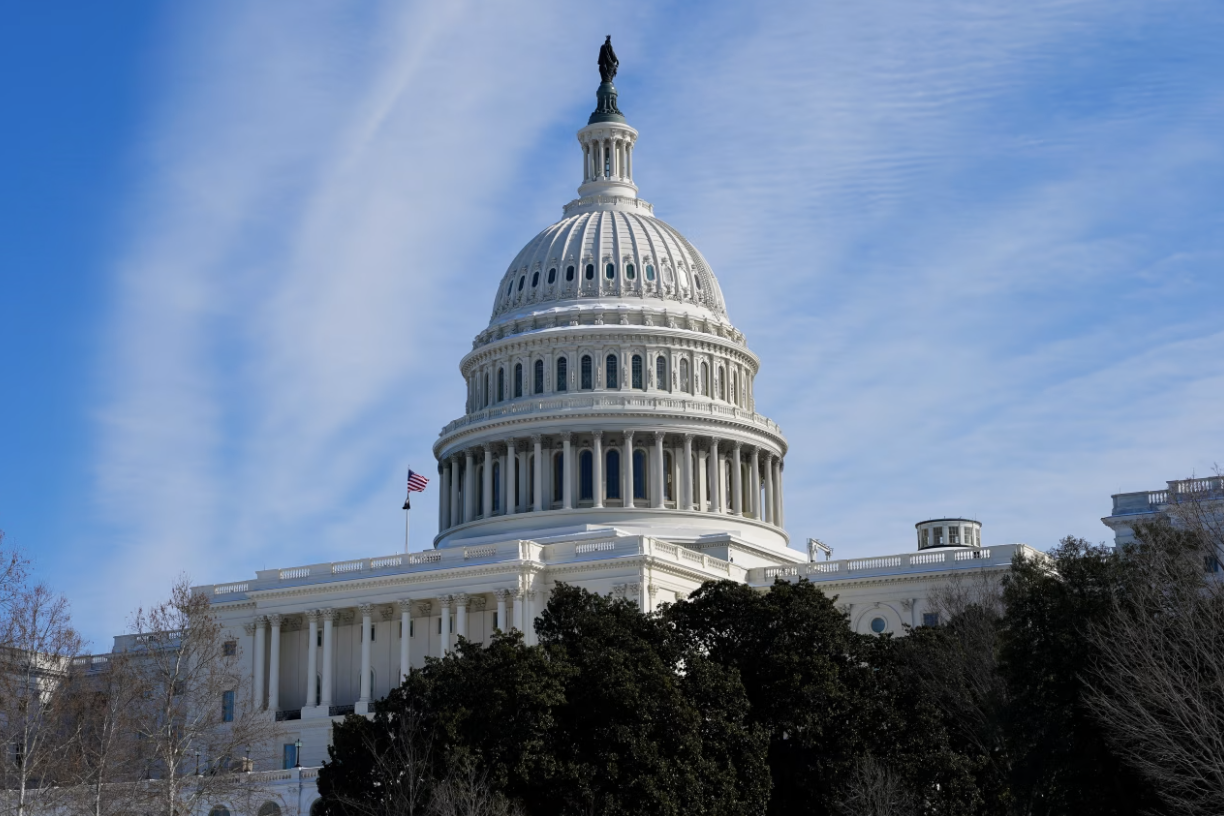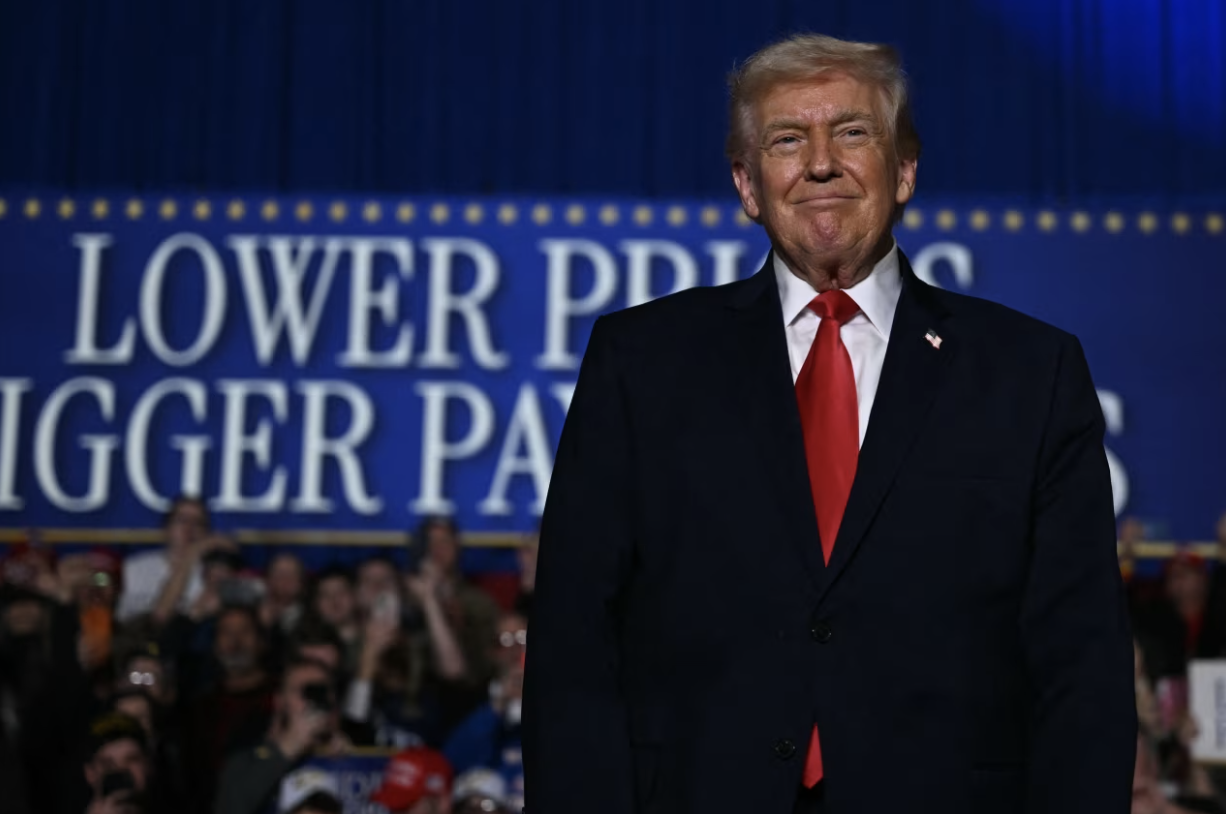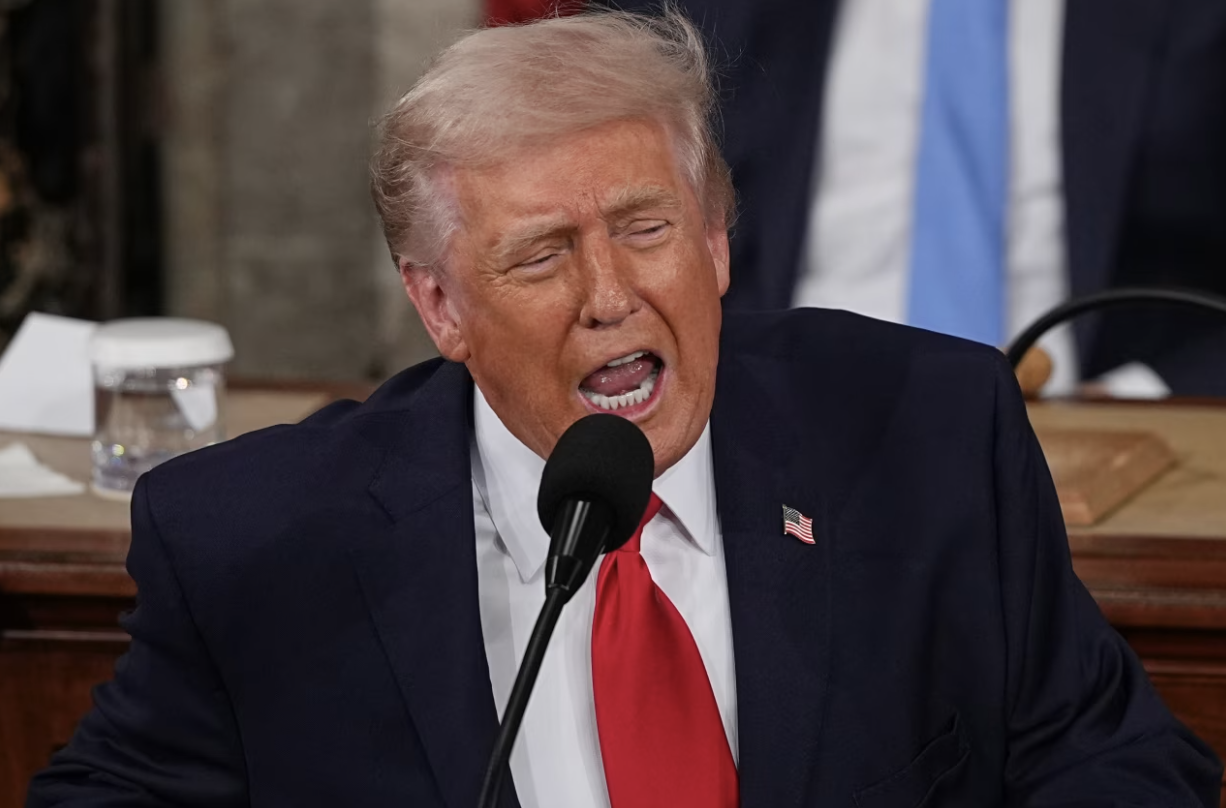
At one hour and 48 minutes, it was history’s longest State of the Union speech. President Trump’s address Tuesday was also the most effective and extensive use of gallery guests since Ronald Reagan introduced the practice in his 1982 State of the Union. But as Mr. Trump spoke of his first year back in office, he made a key mistake.
The president electrified the House chamber by bringing in the U.S. men’s Olympic hockey team and awarding goalie Connor Hellebuyck the Presidential Medal of Freedom. Even Democrats stood and joined in the chants of “USA! USA!”
The president also presented two Congressional Medals of Honor. One went to a helicopter pilot grievously wounded during the capture of Venezuelan President Nicolás Maduro. The other was bestowed on a 100-year-old Navy pilot who led his squadron to victory in a 1952 Korean War aerial battle against an overwhelming enemy force that remained secret until 2002.
The Coast Guard swimmer who jumped time and again from a chopper into the raging waters of the July 2025 Texas flood, saving 165 lives, was also honored. A Venezuelan dissident sprung from prison surprised his niece in the gallery, to applause. Two National Guardsmen who were ambushed on duty in Washington received Purple Hearts, one posthumously.
Mr. Trump introduced families who had suffered violence or loss inflicted by illegal aliens as he pressured Democrats to support a sanctuary city ban, tougher immigration laws and voter ID rules.
Throughout his record number of guest introductions, the president was empathetic and personable. His remarks, delivered as written, were often moving, patriotic and unifying.
This was also the most partisan State of the Union in memory. In what may have been a first, Mr. Trump attacked his predecessor by name several times. He repeatedly condemned congressional Democrats, tried to force them to stand and applaud him, and lacerated them when they didn’t. He was spoiling for a fight.
Many presidents have used the occasion to pressure the opposition on key issues. None have done so as directly and brutally as Mr. Trump did Tuesday. He savaged Democrats as “sick people” and “crazy,” claiming they “are destroying our country.”
This cheered Republicans and angered Democrats in the room. But did it help Mr. Trump with the key voters the GOP must sway in the midterms? Almost everything the president said energized his MAGA hard core. But they aren’t enough to stave off a shellacking this fall.
Mr. Trump should have fixated more on those of his 2024 voters who have since become disenchanted: Those represented by his approval rating’s almost 8-point slide in the RealClearPolitics average since re-entering office. That isn’t a large slice of the electorate, but those swing voters will decide which party controls Congress for Mr. Trump’s final two years in the White House.
For them, the president’s speech almost certainly didn’t sound based in reality. Many Americans, especially swing voters, are pessimistic about the economy. At the end of 2025, 12-month inflation was at 2.7%, near its 2.9% level the December before Mr. Trump took office. The economy started off gangbusters in 2025 with 3.8% growth in the second quarter and 4.4% in the third but slowed to a crawl with 1.4% in the fourth. The congressional Joint Economic Committee says the U.S. lost 108,000 manufacturing jobs last year. And all this took place amid growing public concern over the effect of artificial intelligence on jobs, utility bills, kids and the future.
Yet the president claimed “prices are plummeting downwards.” They generally aren’t. His tariffs, he opined, will “substantially replace the . . . income tax,” and ending fraud in federal spending will produce “a balanced budget overnight.” They won’t. Here, Mr. Trump sounded as out of touch as Joe Biden did when he kept proclaiming “Bidenomics is working.”